When Light Turns Structural
On facades that refuse ornament until hard directional light cuts them into planes, intervals and pressure.
Most buildings spend the day negotiating with distraction: signage, parked steel, street clutter, flat noon cloud. They read as background because the light around them is democratic. Nothing is withheld, so nothing carries weight.
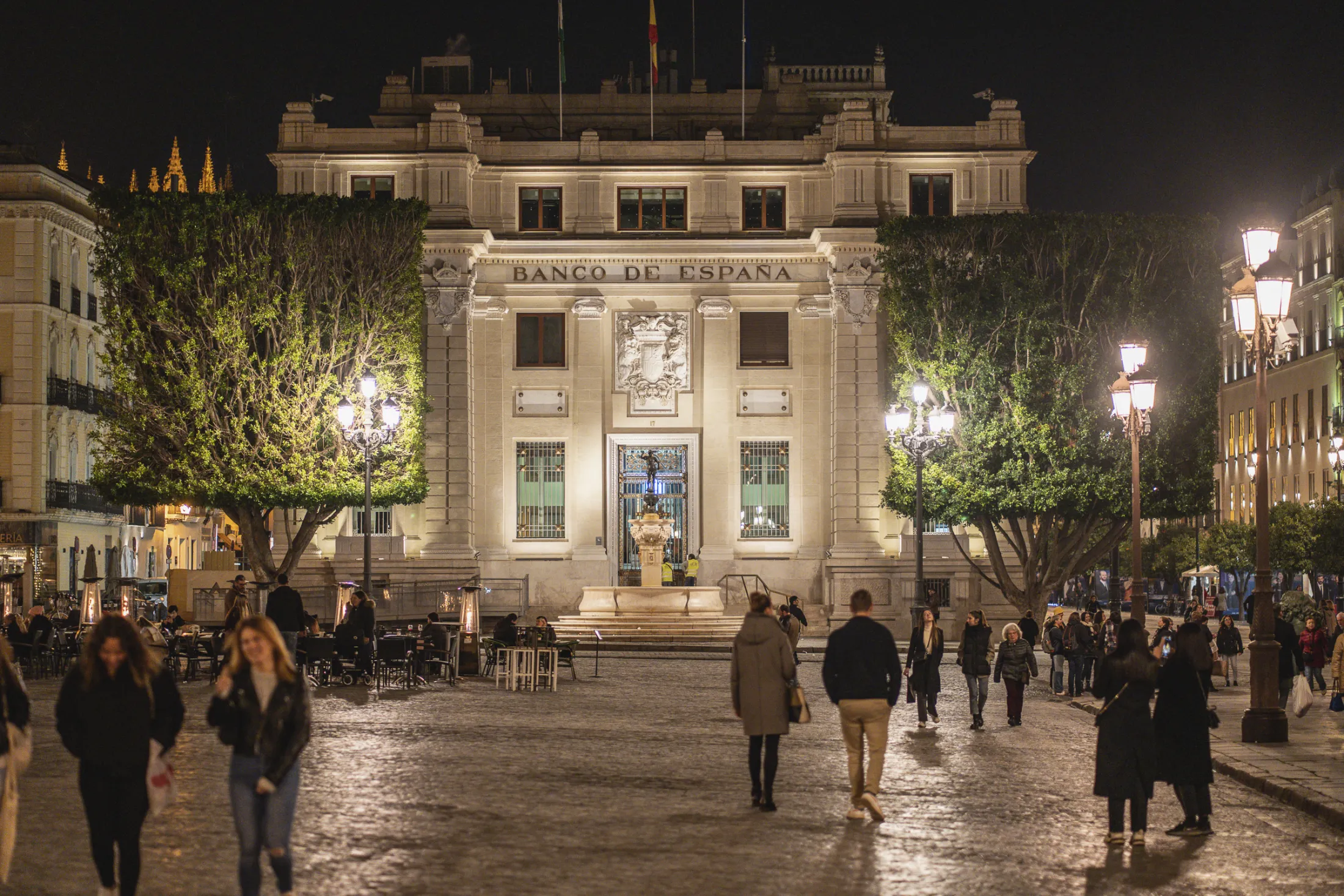
The archive starts working in the narrow window when illumination stops describing surface and starts behaving like load-bearing structure. At dusk—or under sodium and floodlight after the square empties—a limestone cornice or a narrow cut between pale walls stops being picturesque. It becomes an instrument for measuring distance.
Waiting Out the Performance
In narrow passages, the mistake is chasing the decisive gesture. If you wait three seconds past the obvious frame, the street settles back into its real proportions. A single cyclist or a distant figure is useful only as a unit of measure, never as an anecdote.
Light is not atmosphere here. It is the blade that decides which wall advances and which corridor disappears.
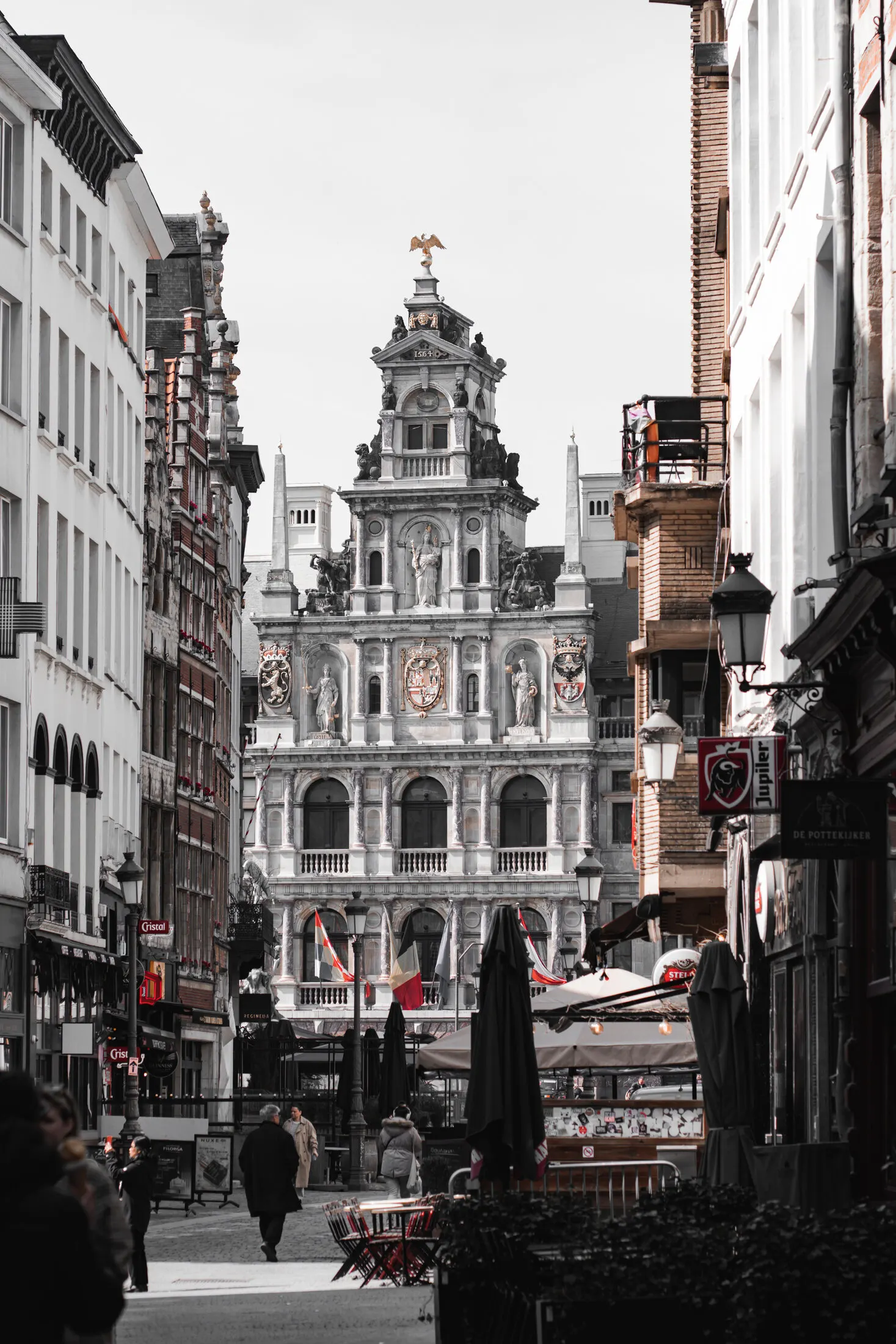
Restraint in the Darkroom
Working in a stripped monochrome register on the contact sheet forces every frame to survive on geometry alone. Color remains stored underneath—available when inspecting the raw plate—but if a photograph collapses without chroma, it does not belong in the sequence.